Is a 25-Year or 30-Year Mortgage Cheaper Overall in the UK?
A 25-year mortgage is cheaper overall. With the same loan, rate and fees, you clear the debt five years sooner and pay less interest. A 30-year term lowers your monthly payment, but you pay interest for longer.
On £200,000 at 4.5%, the 30-year term saves you £98 a month but costs about £31,300 more in interest. When you compare terms, look at three figures together: the monthly payment, the total interest and how quickly the balance falls.
£200,000 over 25 years versus 30 years
This example uses a £200,000 repayment mortgage at 4.5%. It’s a worked example, not a mortgage offer.
| Measure | 25-year mortgage | 30-year mortgage |
|---|---|---|
| Monthly repayment | £1,111.66 | £1,013.37 |
| Total interest | £133,499 | £164,813 |
| Total repaid | £333,499 | £364,813 |
| Balance after five years | £175,716 | £182,316 |
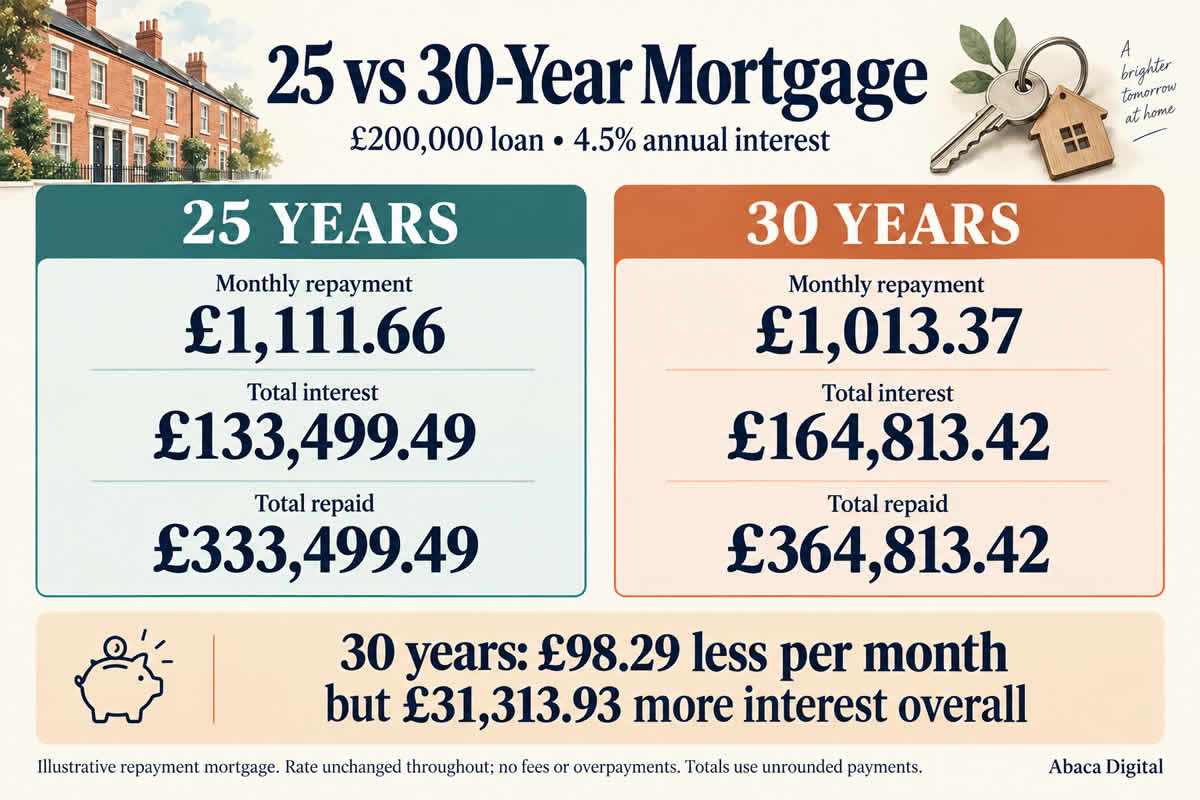
The figures assume the rate stays at 4.5% for the full term, interest is charged monthly, and there are no fees or overpayments. Your lender may charge interest daily and round differently. “Cheaper” here means the total you repay. It doesn’t allow for inflation or what you might do with the monthly difference.
The gap shows up long before the end
In the first month, both borrowers pay £750 in interest. The 25-year payment clears £361.66 of the loan, but the 30-year payment clears only £263.37. Because the longer term pays off the debt more slowly, you pay interest on a bigger balance for longer.
After five years, the 30-year borrower has paid about £5,900 less but still owes about £6,600 more. The £700 difference is extra interest.
That matters if you expect to sell or remortgage within a few years. A smaller balance means more equity and potentially a lower LTV band when you choose your next deal. MoneyHelper’s guide to longer mortgage terms covers the same trade-off.
Your term and your fixed deal are separate
A 30-year term doesn’t mean a 30-year fixed rate. The term is how long you take to repay. The fixed deal, usually two or five years, covers only the start. A five-year fix can sit inside either a 25-year or 30-year mortgage, and your rate will change when it ends.
The interest figures above isolate the effect of the term. They aren’t a forecast of future rates. MoneyHelper’s guide to mortgage interest rates explains fixed, tracker and variable deals.
Overpaying a 30-year mortgage to match 25 years
Pay an extra £98.29 a month on the 30-year mortgage and you’re paying exactly what the 25-year borrower pays. As long as the rate stays the same, you’ll clear it in 25 years with the same total interest.
The appeal is flexibility: a lower required payment, with the option to pay more when you can. But it only works if you keep the overpayments up every month. The odd lump sum won’t get you there. Check your overpayment allowance and any early repayment charges first. MoneyHelper explains these in its overpayment guidance.
Watch for a term reset when you remortgage
Five years into a 30-year mortgage, you have 25 years left. Take a new 30-year mortgage at that point and you’ve pushed your mortgage-free date back five years.
A new deal can look cheap partly because it spreads the debt over more months. Compare deals over your remaining term first, fees included, and treat any extension as a separate decision. MoneyHelper’s remortgaging guide covers what to check.
Compare the terms with your own numbers
Use our UK mortgage calculator to run both terms side by side. Keep the loan and rate the same so you only see the effect of the term.
- Note the monthly payment and total interest over 25 years.
- Switch to 30 years and compare.
- Try both again at a higher rate.
- Check each payment against your bills, other debts, maintenance and savings buffer.
A 25-year term cuts the interest. A 30-year term cuts the monthly payment. The right choice is the shortest term you can comfortably afford alongside everything else, not simply the lowest payment.
This article covers repayment mortgages. Interest-only mortgages need a different comparison, because the payments don’t reduce the loan.