What Is the Difference Between a Repayment and Interest-Only Mortgage?
A repayment mortgage gradually clears both the interest and the money you borrowed. With a standard interest-only mortgage, your monthly payments only cover the interest - the amount you borrowed just sits there, unpaid, until you settle it separately when the term ends.
On paper, interest-only looks like the better deal: lower payments for the same loan and rate. But that smaller payment just defers a much bigger job to later. Comparing the two properly means looking at both what you pay today and what you'll still owe down the line.
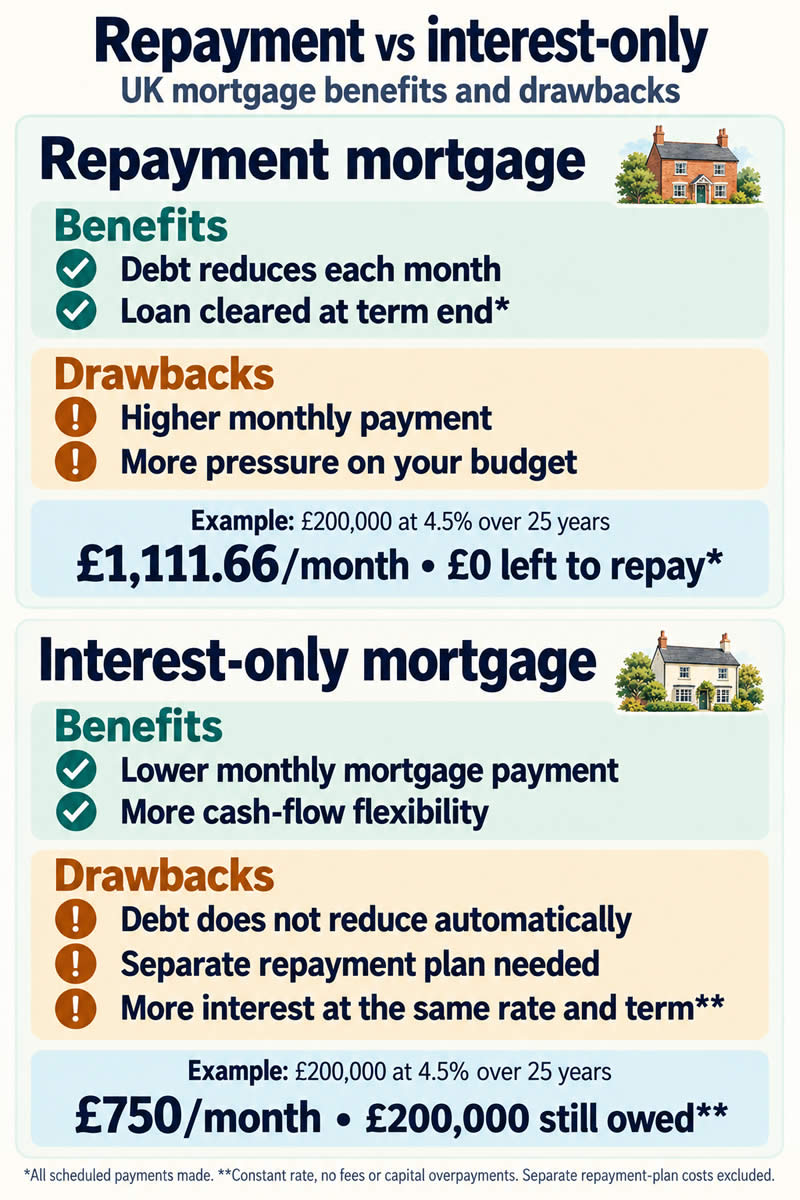
Repayment and interest-only, side by side
| Feature | Repayment mortgage | Interest-only mortgage |
|---|---|---|
| Scheduled monthly payment | Interest plus part of the amount borrowed | Interest on the outstanding balance |
| Balance during the term | Falls as scheduled capital repayments are made | Stays the same unless you separately repay capital |
| At the end of the term | Cleared if all required payments have been made and the agreed schedule followed | Outstanding capital must be repaid |
| Monthly cost for the same loan and rate | Higher because you are reducing the debt | Lower mortgage payment, with separate provision needed for the capital |
| Main planning concern | Keeping up with the required repayments | Keeping up with interest payments and funding the final balance |
How a repayment mortgage actually works
The amount you've borrowed is called the capital. Every scheduled payment covers that month's interest and chips away at the capital too. Early on, interest eats up most of the payment because the outstanding loan is still large. As the balance shrinks, more of each payment goes toward the debt itself - assuming the rate stays put.
Take a £200,000 repayment mortgage at 4.5% over 25 years: the estimated monthly payment comes to £1,111.66. Of that first payment, roughly £750 covers interest and about £361.66 reduces the loan. Next month's interest is then calculated on that slightly smaller balance.
Plug your own borrowing amount, rate and term into our UK mortgage calculator to see the repayment figure and watch the balance come down over time. Just bear in mind it models capital-and-interest repayments, so its standard result isn't an interest-only quote.
How an interest-only mortgage actually works
Same £200,000 loan, same 4.5% rate, but a much simpler monthly sum:
£200,000 × 0.045 ÷ 12 = £750
That £750 covers the interest for the month - nothing more. It doesn't touch the £200,000 you owe. Make no separate capital repayments, and you'll still owe the full £200,000 at the end of the term, no matter how many years of on-time payments came before it.
For a standard UK residential interest-only mortgage, lenders will normally want proof of a credible repayment strategy before they approve it - what counts depends on their own criteria and your situation. A hoped-for inheritance, or just assuming the house will go up in value, generally won't cut it as a plan. MoneyHelper's guide to repaying an interest-only mortgage walks through the actual options and their risks.
Lower payments now, more interest overall
This example keeps the loan, rate and term fixed throughout - a constant 4.5% over 25 years, monthly interest at the annual rate divided by 12, no fees, no overpayments. Real UK mortgage rates will move once a deal ends, of course.
| Measure | Repayment | Interest-only |
|---|---|---|
| Monthly mortgage payment | £1,111.66 | £750.00 |
| Interest paid over 25 years | £133,499.49 | £225,000.00 |
| Capital due at the end | £0 | £200,000.00 |
| Total paid to the lender, including capital | £333,499.49 | £425,000.00 |
The interest-only payment is £361.66 cheaper each month - but because the loan never shrinks, it keeps racking up interest on the full £200,000 the whole way through. Here, that adds up to £91,500.51 more in mortgage interest over the term. These totals come from unrounded calculations, so multiplying the displayed monthly figure by 300 might land you a penny or two off.
None of this factors in the returns, charges or tax on whatever separate savings or investment plan you use to cover the capital - this is purely a comparison of mortgage cash flows, not a verdict on any investment strategy.
That monthly gap isn't automatically spare cash
Say you set aside that £361.66 difference every single month. Over 300 months, with zero growth, you'd end up with £108,498 - leaving a £91,502 shortfall against the £200,000 you'd still owe.
Starting from nothing, building £200,000 over 25 years with no investment growth at all would take roughly £666.67 a month. Add that to the £750 interest payment, and you're looking at about £1,416.67 a month committed to the mortgage and its repayment fund combined. This is just a budgeting illustration - not a lender-approved repayment strategy.
Investment growth could reduce what you need to set aside, but returns aren't guaranteed and losses are possible. Other assets you already have can shift the picture too. The real question is whether your plan can cover the capital on time - including if things don't go as well as hoped.
Our UK mortgage affordability calculator is a useful starting point for exploring your budget. Factor in any separate repayment-plan contributions alongside your other bills and commitments - remember, an estimate here isn't a lender's approval.
Fixed or variable is a separate decision entirely
Repayment and interest-only are about how the debt gets paid off. Fixed, tracker and other variable rates are about how the interest rate itself behaves. Either repayment method can come with a fixed or variable rate, depending on what's available and what you qualify for.
A five-year fixed deal doesn't mean the whole mortgage needs repaying in five years - it just fixes the rate for that period within your longer term. Once the rate moves, your monthly cost can shift under either repayment method.
On an unchanged £200,000 interest-only balance, a rate rise from 4.5% to 5.5% pushes the simplified monthly interest payment from £750 up to £916.67. On a repayment mortgage, the new figure also depends on how much balance and time you've got left.
Can you mix the two, or switch later?
A part-and-part mortgage splits your borrowing in two: part gets repaid gradually, the rest stays interest-only. Splitting £200,000 evenly between them at 4.5% over 25 years gives an estimated monthly payment of £930.83 - but the £100,000 interest-only half still needs settling at the end unless you've paid it down separately.
Switching from interest-only to repayment is sometimes possible with your lender's agreement, but the longer you leave it, the steeper the new payment gets. Repaying the same £200,000 over 15 years instead of 25, at 4.5%, jumps to roughly £1,529.99 a month, versus £1,111.66 over the full 25. Fees, affordability checks and what's actually on offer at the time will all shape your options.
If you're already on an interest-only mortgage and think you'll come up short, get in touch with your lender well before the end date - don't wait to see what happens. The FCA's guidance for interest-only borrowers is clear that acting early matters, and you shouldn't assume a term extension or new mortgage will automatically be there for you.
What to weigh up before choosing
- Your full monthly commitment: include whatever you're setting aside to repay interest-only capital, not just the mortgage payment itself.
- What you'll owe at the end: know the exact figure, and where the money to clear it is actually coming from.
- A rate rise: test a higher rate for after your current deal ends, rather than assuming today's payment holds for the whole term.
- Fees and flexibility: check overpayment limits, early-repayment charges, and what it takes to change repayment method later.
- Your later-life budget: think about whether the loan or repayment plan runs into retirement, and how you'd cover it then.
A repayment mortgage bakes debt reduction straight into the monthly payment. Interest-only splits that job off entirely, leaving it up to you to fund separately. A smaller direct debit only makes sense if the remaining debt has a genuinely credible route to being paid off.
Common questions about repayment vs interest-only mortgages
General information about standard UK mortgages, not personalised financial advice. Figures are illustrative, not current mortgage offers. Confirm costs, eligibility and repayment requirements with your lender or a qualified mortgage adviser. Your home may be repossessed if you do not keep up repayments on your mortgage.