What your loan-to-value ratio tells you
Loan-to-value (LTV) is your mortgage as a percentage of your home’s value. It’s one of the first things a lender looks at, because it decides which deals you can apply for. A bigger deposit lowers it when you buy, and paying off the mortgage lowers it over time.
Use this calculator to check your current LTV, compare it with a new loan, include any second mortgage or secured loan, and see how much you’d need to repay to reach a target band. LTV helps you compare deals, but it doesn’t show whether you can afford a loan or guarantee you’ll be accepted.
How to use the calculator
- Property value. Use the purchase price if you’re buying, or a realistic current value if you already own. A lender’s valuation may come in lower.
- First mortgage balance. If you’re buying, that’s the price minus your deposit. If you’re remortgaging, use what you owe now, not what you first borrowed.
- Other secured borrowing. Enter any second mortgage or secured loan. Leave these at zero if you don’t have one, and don’t include unsecured loans or credit cards.
- Proposed loan and target LTV. Pick a target such as 75% to see the maximum first mortgage at that level and how much you’d need to pay off to get there.
The proposed combined LTV adds your proposed first and second mortgages to your current secured credit balance. The target and borrowing-room figures look at the first mortgage only, so they don’t leave space for other secured debts.
How to work out LTV and equity
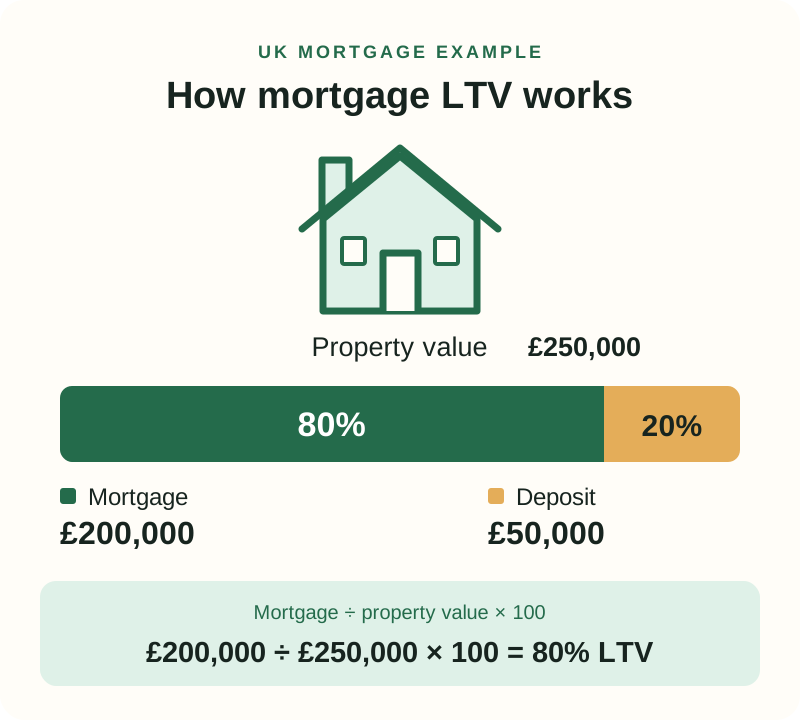
LTV (%) = mortgage balance ÷ property value × 100
Buy a £250,000 home with a £50,000 deposit and your mortgage is £200,000. £200,000 ÷ £250,000 = 80% LTV. If you already own the home, that same £50,000 is your equity, assuming nothing else is secured on it.
Equity is your home’s value minus everything secured against it. The calculator doesn’t take off selling costs or early repayment charges, so it isn’t the cash you’d walk away with after a sale.
UK LTV bands and the deposit you’d need
UK lenders usually price deals in LTV bands, and the rate often drops as you move into a lower band. Not every lender offers every band. The figures below assume a £250,000 purchase and a valuation that matches the price.
| LTV | Deposit / equity | Deposit amount | Mortgage amount |
|---|---|---|---|
| 95% | 5% | £12,500 | £237,500 |
| 90% | 10% | £25,000 | £225,000 |
| 85% | 15% | £37,500 | £212,500 |
| 80% | 20% | £50,000 | £200,000 |
| 75% | 25% | £62,500 | £187,500 |
| 60% | 40% | £100,000 | £150,000 |
Most buyers need at least a 5% deposit, and the best rates usually start at around 60% LTV. A few specialist mortgages accept less under specific conditions. See MoneyHelper’s guide to how much deposit you need. The lowest rate isn’t always the cheapest deal once fees are added, so compare the total cost.
Could another £1,000 move you into a lower band?
Borrowing £226,000 on a £250,000 home puts you at 90.4% LTV, just over a 90% limit. Add £1,000 to your deposit and the loan drops to £225,000, which is exactly 90%. Set the target LTV to 90 to try it.
Homeowners can do the same thing with a lump-sum payment before remortgaging. Whether it’s worth it depends on the rates on offer, any charges and how much savings you need to keep. The calculator rounds to one decimal place, but lenders don’t round you into a lower band, so 90.04% still counts as over 90%.
Remortgaging: the lender’s valuation decides
A £180,000 mortgage on a home valued at £240,000 is 75% LTV. If the lender values it at £225,000 instead, you’re at 80%, even though you owe exactly the same. Online price estimates are often optimistic, so try a lower valuation as well as your own figure.
Your LTV only matters when you choose a new deal, either by remortgaging or through a product transfer with your current lender. A lower LTV won’t cut the rate on a fixed deal you’re already on. Before switching, compare fees and any early repayment charge. MoneyHelper’s remortgaging guide covers the costs to look out for.
Repaying capital lowers your LTV, but a fall in house prices can undo that progress. On an interest-only mortgage the balance doesn’t fall, so your LTV only changes if the property’s value does.
Added fees can count differently
The LTV a lender uses to pick your product isn’t always the simple ratio. Nationwide’s broker criteria, for example, leave an added product fee out of the LTV used for product eligibility and credit scoring, but include it in the affordability check. The fee is still added to your loan and charged interest. See Nationwide’s fee rules, and remember that each lender sets its own rules, which can change.
This calculator divides the balance you enter by the property value and doesn’t apply any lender’s fee exceptions. If you’re close to a band limit, ask how an added fee will be treated.
Second-charge mortgages and combined LTV
A second-charge mortgage is another loan secured on the same home. With a £180,000 first mortgage and a £20,000 second charge on a £250,000 home, your first-mortgage LTV is 72%, but your combined LTV is 80%. Looking only at the first mortgage would make your equity look bigger than it is.
If you have a secured credit facility, the full-credit-limit result swaps the amount you’ve drawn for the full limit, or the balance if that’s higher. It shows your maximum exposure rather than a standard lending test. Most people don’t have one and can leave both fields at zero.
Think carefully before securing other debts against your home.
UK loan to value calculator questions
The calculator shows 90.0% but my lender says I’m over 90%. Why?
The calculator rounds to one decimal place, while lenders apply the exact figure, so 90.04% shows as 90.0% here but is still over the limit. The lender may also be using a lower valuation or adding a fee to the loan. Enter the lender’s valuation and your full loan, including any added fees, to see its figure.
Has my LTV fallen just because house prices went up?
On paper, yes, but it only helps when you choose a new deal. Many lenders use an automated valuation for product transfers, and that may not match your own estimate. If you think your home is worth more, ask whether the lender will revalue it before you pick a deal.
Is it worth paying a lump sum to reach 75% LTV?
Work out the saving first. On a £240,000 home with a £192,000 mortgage, you’d need to pay £12,000 to reach 75%. If the 75% deal is 0.2 percentage points cheaper, that saves roughly £360 a year in interest, plus whatever the £12,000 itself saves. Weigh that against any early repayment charge and how much cash you need to keep in reserve.
Does an unused secured credit limit affect my LTV?
It can. Lenders may look at the full limit rather than what you’ve drawn, because you could borrow it at any time. Compare the drawn balance and full-limit results to see both views.
What if my LTV is over 100%?
You’re in negative equity: you owe more than the home is worth. Most new lenders won’t remortgage you, but your current lender may still offer a product transfer. Keep paying down the balance and check your LTV again when your deal is due to end.
Will a lower LTV reduce the rate on my current fixed deal?
No. Your fixed rate is set for the deal period. A lower LTV only counts when you choose your next deal, whether you stay with your lender or switch.
Your home may be repossessed if you do not keep up repayments on your mortgage.